


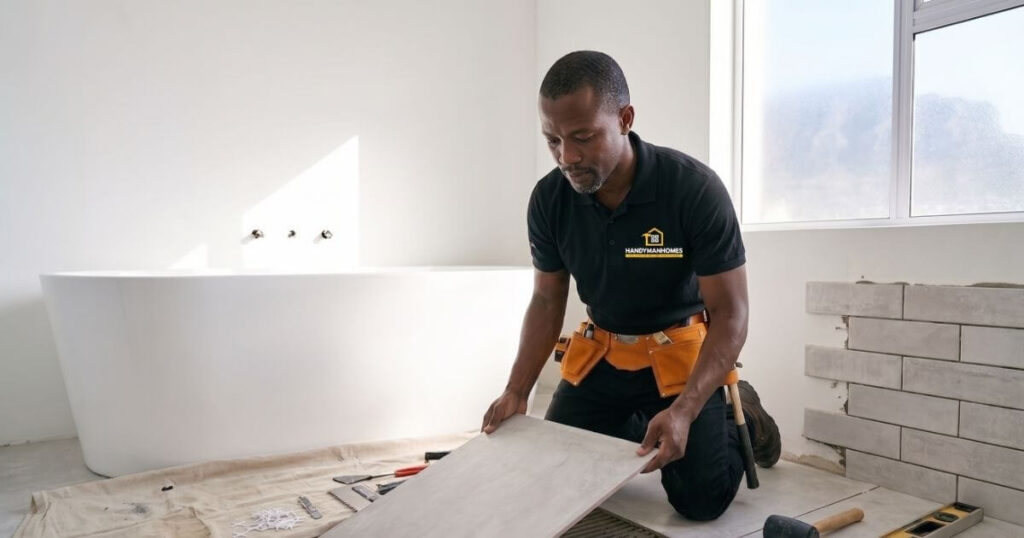
Tiles are one of the most permanent decisions you make in a home renovation. Once they are down and grouted, changing your mind means a full strip-out – a messy, expensive process that most homeowners only do once. Getting the tile selection right before a single square is fixed is therefore worth a significant investment of time and thought.
Cape Town homeowners are spoilt for choice – the city has one of the strongest tile retail markets in South Africa, with options ranging from budget ceramic at R80 per square metre through to premium Italian large-format porcelain at over R1,500 per square metre. The challenge is not finding tiles; it is knowing which tile is right for your specific space, substrate, and environment. If you are mid-way through planning a bathroom renovation or kitchen renovation in Cape Town, getting this decision right before work starts on site saves significant time and money.
This guide covers everything you need to know to choose tiles confidently for a Cape Town bathroom or kitchen – tile types, sizes, finishes, grout selection, supplier advice, and the most common mistakes that lead to costly call-backs. Whether you are renovating a compact Sea Point apartment bathroom or designing a large open-plan kitchen in Constantia, the principles here apply.
Key Takeaways
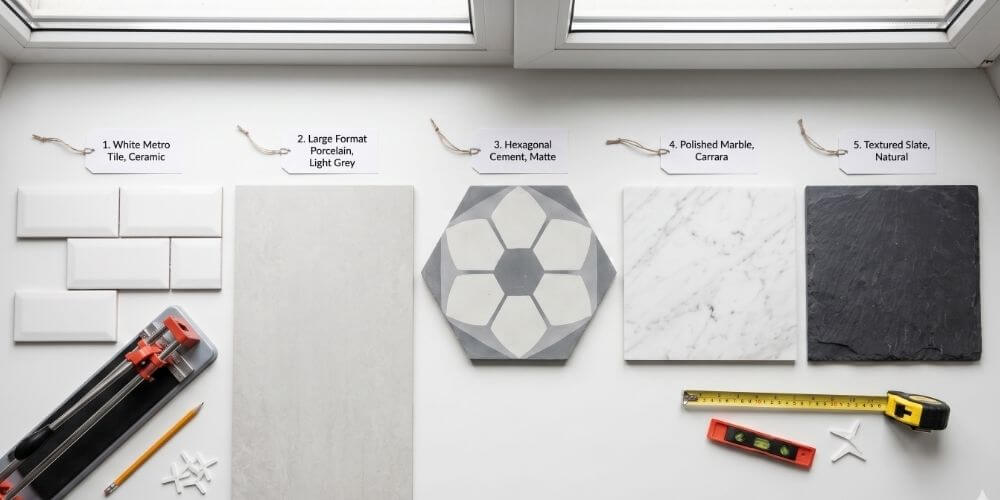
The first decision in any tile selection is material. The two dominant options in the residential market are ceramic and porcelain, but natural stone, cement, and glass tiles each have their own place in a Cape Town home.
Porcelain is the workhorse of contemporary Cape Town bathroom and kitchen renovation. It is produced from fine, dense clay fired at very high temperatures, resulting in a tile that is harder, denser, less porous, and more resistant to water, staining, and wear than ceramic. For bathroom floors, shower enclosures, kitchen floors, and any area that sees moisture and heavy use, porcelain is the correct choice.
The South African market has strong porcelain offerings from local manufacturers at competitive price points, as well as a well-established import channel for Spanish and Italian tiles. Tile Africa, Italtile, and CTM all carry extensive porcelain ranges from R180 to R1,500+ per square metre, covering every aesthetic from industrial concrete looks to natural stone effects.
Ceramic tiles are made from coarser clay and fired at lower temperatures than porcelain. They are lighter, easier to cut, and more cost-effective – but they are more porous and less hard-wearing. Ceramic is well-suited to wall tiling in bathrooms and kitchens, where it is not subject to foot traffic or constant wet exposure. On floors, ceramic is suitable for low-traffic areas only and is not recommended for shower floors or wet rooms.
Marble, travertine, slate, and granite tiles are used extensively in higher-end Cape Town renovations. They add a warmth and texture that manufactured tiles cannot replicate, and they look at home in the Cape Dutch and Victorian properties common in the Southern Suburbs and City Bowl. If you are considering natural stone as part of a broader interior design project, a designer can advise on which stone types suit your space and light conditions best.
Natural stone requires more maintenance than porcelain or ceramic – it must be sealed on installation and resealed periodically, and it is more vulnerable to staining and etching from acids (including certain cleaning products). In Cape Town’s winter damp conditions, sealing is particularly important. Factor this into your selection if you are choosing natural stone for a bathroom.
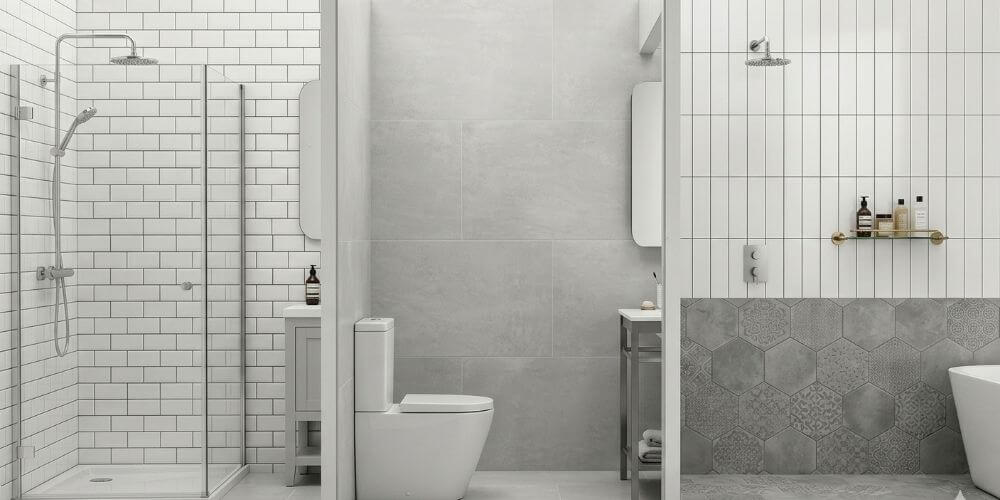
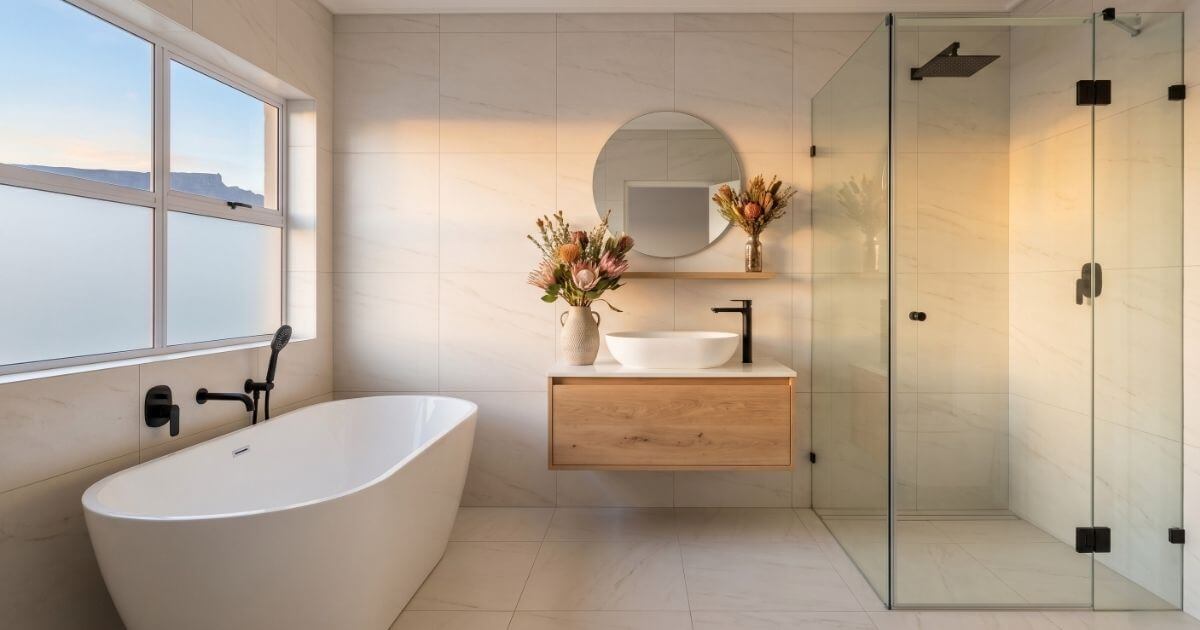
One of the strongest trends in Cape Town bathroom and kitchen design in 2026 is the move to large-format tiles – 60x60cm, 60x120cm, and even 120x120cm formats. Large-format tiles create a cleaner, more contemporary look with fewer grout lines, which also makes the surface easier to clean. They work particularly well in the smaller Cape Town apartment bathrooms common in Sea Point, Green Point, and the City Bowl, where they make the space feel significantly larger.
Tile size and layout pattern have as much impact on the final look of a bathroom or kitchen as the tile itself. Getting this decision right before installation saves you from a result that is technically correct but visually underwhelming.
For bathroom floors, the rule of thumb is simple: in a small bathroom, a large tile (60x60cm minimum) makes the space look larger by reducing grout line density. In a large bathroom, you have the flexibility to use any format – though very small mosaic tiles on a large floor can look fussy. In a Cape Town apartment bathroom of 4-6 square metres, a 60x60cm or 60x120cm floor tile will transform the perceived size of the space.
Wall tiles offer more creative flexibility than floor tiles because they do not need to meet slip resistance requirements. Metro tiles (75x150mm or 100x200mm) in a brick-bond pattern have become a Cape Town staple in everything from Woodstock coffee shop renovations to Bakoven holiday apartments. They are versatile, timeless, and available at every price point. For a more contemporary look, large-format wall tiles in a single vertical or horizontal run from floor to ceiling create a clean, unbroken surface.
Grout line width has a significant effect on the look of a tiled surface. Narrow grout lines (1.5-2mm) suit large-format porcelain tiles and create a seamless, minimal look. Wider grout lines (5-10mm) are appropriate for handmade-look and rustic tiles where slight size variation is intentional. Always follow the tile manufacturer’s recommended grout joint width for the specific product.
Beyond aesthetics, several practical factors determine whether a tile performs well in a Cape Town home over the long term.
Floor tiles in wet areas must have an adequate slip resistance rating. The German R-rating system is the standard used by most South African tile suppliers: R9 is suitable for domestic interiors in dry conditions, R10 for wet residential bathrooms and shower floors, and R11 or higher for outdoor and commercial wet applications. Always check the slip resistance rating for any tile you are considering for a floor in a Cape Town bathroom. A professional bathroom renovation team will automatically verify this before specifying any floor tile.
While Cape Town does not experience frost at sea level, the Southern Suburbs and higher areas like Constantia, Tokai, and the Boland foothills can see temperatures close to zero on winter nights. For outdoor tiling on patios and pool surrounds in these areas, use tiles rated for cold weather exposure – high-porosity tiles can absorb water and crack if temperatures drop below freezing.
In Cape Town’s older homes, removing original tiling often reveals that the existing adhesion was done directly to a lime plaster substrate that is fragile and difficult to retile over once disturbed. In these cases, tiling over the existing surface – provided it is in sound condition – can be the most practical approach. A tile bonding primer applied to the glazed surface significantly improves adhesion for the new layer. Your Handyman Homes technician will assess the existing tile condition during the site visit and advise on the best approach.
Grout selection is the most overlooked decision in tile specification – and one of the most visible in the finished result. The grout accounts for a significant proportion of the visible surface area, particularly with narrower tiles and wider joint widths.
In Cape Town’s high-humidity bathrooms, using a standard cement grout in shower enclosures and wet areas is a common mistake that leads to mould discolouration within a year. Epoxy grout is non-porous, mould-resistant, and highly durable in wet applications. It is more expensive and harder to work with than cement grout, but in a shower enclosure it is the correct product. For dry bathroom walls and kitchen splash-back areas, a quality sanded or unsanded cement grout is sufficient.
On grout colour: a common approach in Cape Town’s contemporary bathrooms is to match the grout closely to the tile – a light grey tile with a slightly darker grey grout, for example. This creates a quiet, composed surface where the tile pattern reads without the grout lines drawing too much attention. Contrasting grout colours (dark grout with white tiles) make a bold graphic statement but require very clean, precise application to look good.

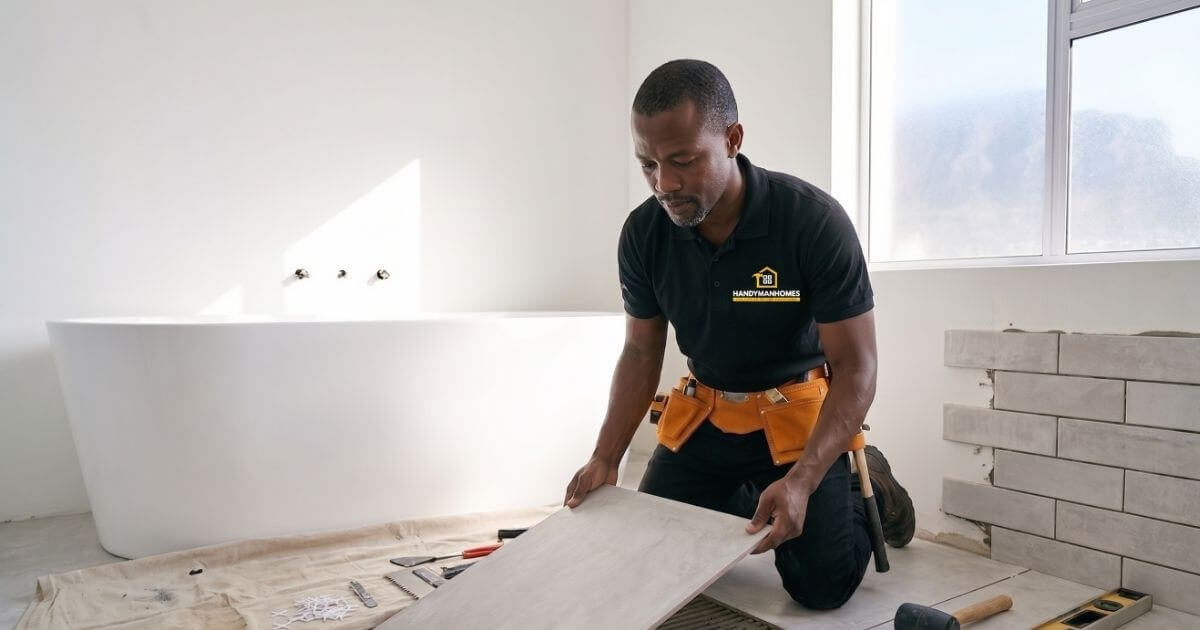
Tile selection is only half the job. Even the most beautiful tiles look mediocre when laid by an inexperienced tiler – and in Cape Town, poorly laid tiles are a persistent complaint. Lippage (tiles that are not flush with each other), uneven grout lines, and incorrect adhesive for the substrate and tile weight are all common problems when corners are cut on installation.
Handyman Homes provides professional tiling services across Cape Town as part of its bathroom renovation service and wider renovation offering. Whether you have already chosen your tiles and need professional installation, or want help with tile selection before the project begins, the Handyman Homes team covers bathrooms and kitchens across Cape Town – from Fresnaye and Camps Bay to Claremont, Bergvliet, and Parklands.
If your tiling is part of a larger home improvement project – new interior painting, updated lighting, or a full room remodel – Handyman Homes can coordinate all trades in a single managed project so you deal with one team from start to finish.
Porcelain tiles are the best all-round choice for Cape Town bathroom floors. They are dense, moisture-resistant, hard-wearing, and available in a huge range of sizes and finishes. For a wet room or shower floor, choose a tile with a slip resistance rating of R10 or higher. Large-format tiles (60x60cm or larger) make a bathroom look more spacious.
Measure the total floor or wall area in square metres, then add 10-15% for cuts and wastage. For diagonal layouts or complex cuts, add 15-20%. Always order from the same batch (lot number) to ensure colour consistency across your installation.
Porcelain is denser, less porous, harder, and more water-resistant than ceramic. It is made from finer clay fired at higher temperatures. Porcelain is the better choice for bathrooms, wet areas, and high-traffic floors. Ceramic is lighter, easier to cut, and more cost-effective, making it suitable for wall tiling and lower-traffic applications.
Light grout makes grout lines less visible and brightens a space, but shows staining over time. Dark grout hides staining and creates a graphic contrast but can make a small space feel heavier. In Cape Town’s humid bathrooms, use a mould-resistant epoxy grout in wet areas. A good rule of thumb: match the grout tone closely to the tile for a seamless look, or go two to three shades darker for deliberate contrast.
Yes, in most cases – provided the existing tiles are firmly bonded to the substrate, there are no hollow or loose tiles, and the added height of the new layer does not cause problems with door clearances or fixtures. Using a tile bonding primer over the existing glazed surface improves adhesion significantly. This approach avoids the cost and mess of removing old tiles.
Larger format tiles with minimal grout lines make a small bathroom look more spacious by reducing the visual noise of many grout lines. 60x60cm or 60x120cm tiles work well in smaller Cape Town bathrooms. Light colours and tiles with a reflective or semi-gloss finish also increase the sense of space.
Cape Town has a strong tile retail market. Major suppliers include Tile Africa (branches in Parow, Claremont, and Montague Gardens), CTM (multiple branches across the city), Italtile (Parow and Stellenbosch), and Builders Warehouse for budget options. For premium Italian and Spanish imports, specialist tile studios in the City Bowl and Southern Suburbs carry curated ranges.








2026 Copyright © Handyman Homes . All rights reserved. Created by Cooper Creative.