


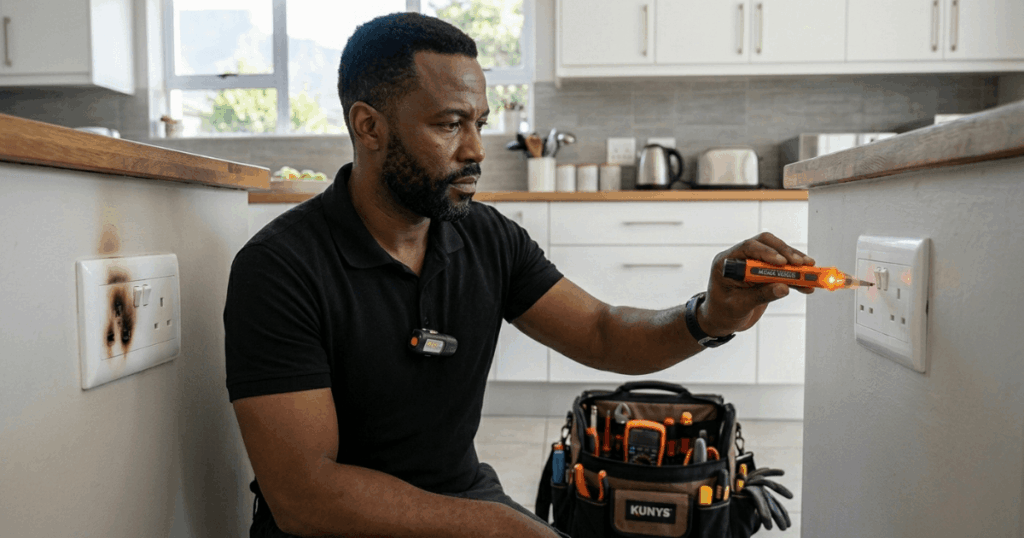
Electrical sockets are one of those home features you never think about – until something goes wrong. In Cape Town homes, faulty or worn sockets are one of the leading causes of residential electrical fires, yet most homeowners do not know the warning signs to look for until there is a serious problem.
South African homes are particularly susceptible to socket wear because of our unique plug standard, load-shedding cycles, and the voltage spikes that frequently follow power restoration. Every time the power comes back on after an outage, a small surge travels through your wiring – and over months and years, this degrades your sockets, particularly older ones. The Handyman Homes registered electrician service covers socket assessments, replacements, and full electrical inspections across all Cape Town suburbs.
Key Takeaways
South Africa’s electrical infrastructure creates specific hazards that do not apply in most other countries. The combination of load-shedding, voltage spikes on restoration, and an ageing national grid means your home’s sockets work harder than those in a stable-grid country.
Cape Town’s property stock spans over a century of construction. Homes in the older suburbs – Woodstock, Observatory, Rondebosch, Tamboerskloof, and parts of the City Bowl – may still have wiring infrastructure that predates modern safety standards. Original sockets in these homes may have been wired without an earth connection, or with substandard insulation now decades past its design life. If you are renovating an older Cape Town home, a full electrical assessment should happen before any new fittings or sockets are added – the Handyman Homes electrician can carry this out as part of a pre-renovation inspection.
Coastal properties from Sea Point to Llandudno face an additional challenge: salt air corrodes the internal metal contacts of sockets over time, increasing electrical resistance and generating heat. This is one reason coastal homes show socket degradation faster than their inland equivalents.
Each time Eskom restores power after a load-shedding outage, the sudden voltage surge that hits your home’s circuits is small but cumulative. Over hundreds of load-shedding cycles, the internal components in standard sockets degrade faster than their rated design life, shortening replacement intervals significantly compared to homes in countries with stable power grids.
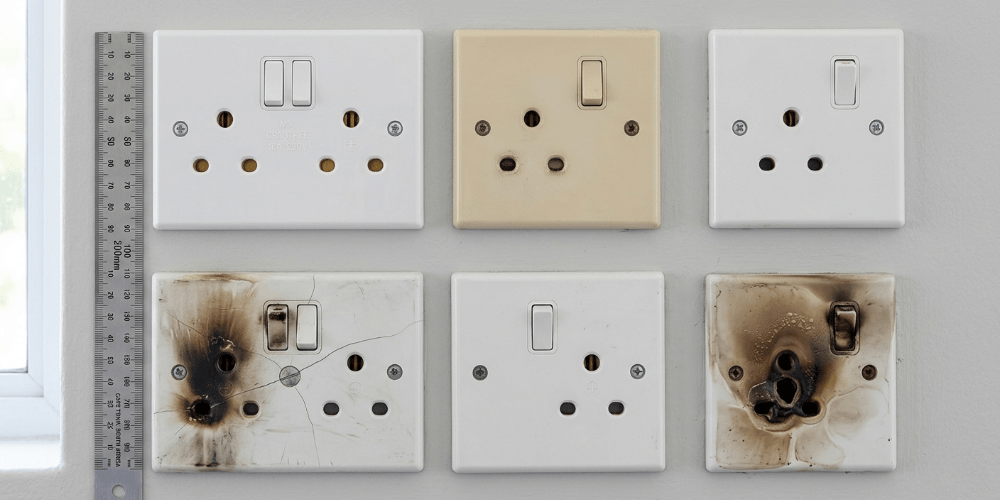
The following signs should never be ignored. Any one of them warrants a call to a qualified electrician – not a note on the to-do list.
Yellowing, browning, or black scorch marks around the plug holes or on the socket faceplate are a sign of arcing – electrical current jumping across a gap rather than travelling through the intended conductor. Arcing generates intense heat and is a primary cause of electrical fires. A discoloured socket should be treated as an emergency.
A faint burning smell near a socket – described as hot plastic or an electrical smell – even without visible discolouration, indicates overheating inside the socket or in the wiring behind it. Switch off the circuit at the distribution board and call an electrician the same day.
A tiny brief spark when inserting a plug quickly is normal – this is the circuit closing. However, large sparks, sparks when removing a plug, or sparks accompanied by a popping sound are not normal. These indicate a loose connection, failed internal spring mechanism, or wiring fault behind the socket.
If your plugs drop out under their own weight or feel loose in the socket, the internal gripping mechanism has worn out. A loose connection creates resistance, which generates heat. Replace the socket immediately.
If a specific circuit breaker in your distribution board trips regularly when a particular socket is in use, that socket or the circuit serving it has a fault. Repeatedly resetting the breaker without investigating the cause is unsafe.
A cracked socket faceplate exposes live wiring and internal components to contact. This is an immediate shock and fire hazard, particularly in homes with children. Replace cracked faceplates immediately.
A socket faceplate should never feel warm or hot during normal use. Heat indicates overloaded wiring, a loose internal connection, or a failing socket. Switch off and call an electrician immediately.
When replacing sockets, it is worth considering whether a like-for-like replacement is the best choice or whether an upgrade makes sense.
USB-integrated sockets combine the standard South African socket with one or two USB-A or USB-C charging ports. These are particularly popular in bedrooms and home office areas and eliminate the need for plug-in USB charger blocks that partially block adjacent sockets.
Surge-protected sockets include built-in components that absorb voltage spikes, providing an additional layer of protection for expensive electronics. Given Cape Town’s load-shedding frequency, these are worth installing at workstations, home theatres, and anywhere sensitive equipment is plugged in directly.
Outdoor and bathroom sockets must be IP-rated for their environment. Using a standard indoor socket in a covered outdoor area in Cape Town’s wet winters is a code violation and a genuine safety risk. If you are also planning a bathroom renovation or outdoor entertainment area upgrade, socket upgrades can be coordinated as part of the broader project.
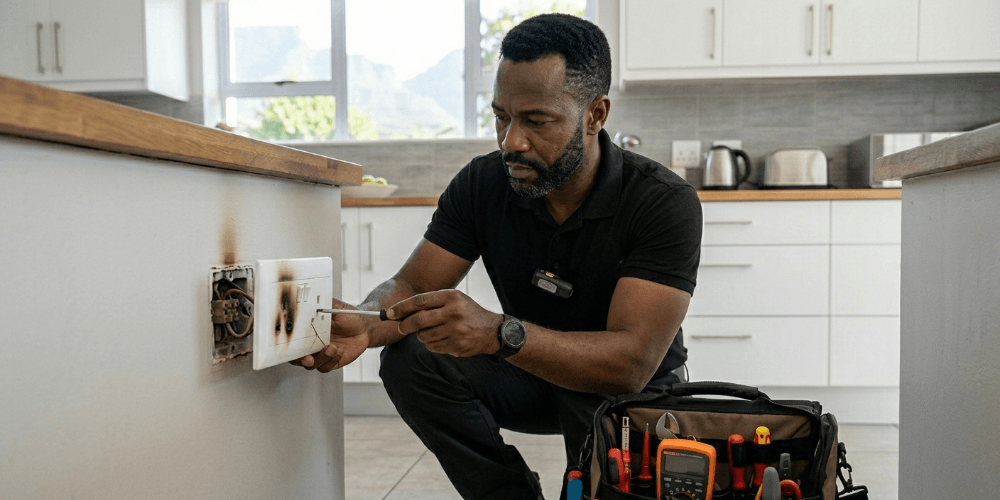
In South Africa, electrical work in a home is legally regulated. Any work beyond replacing a light bulb must be carried out by a registered electrician under the Electrical Installation Regulations of the Occupational Health and Safety Act. After any socket replacement, the electrician must issue a Certificate of Compliance – which is also required when selling a property.
Attempting to replace sockets yourself creates multiple risks: voiding your home insurance, invalidating your property Certificate of Compliance, and creating a genuine risk of electrocution or fire if the wiring is not terminated correctly.
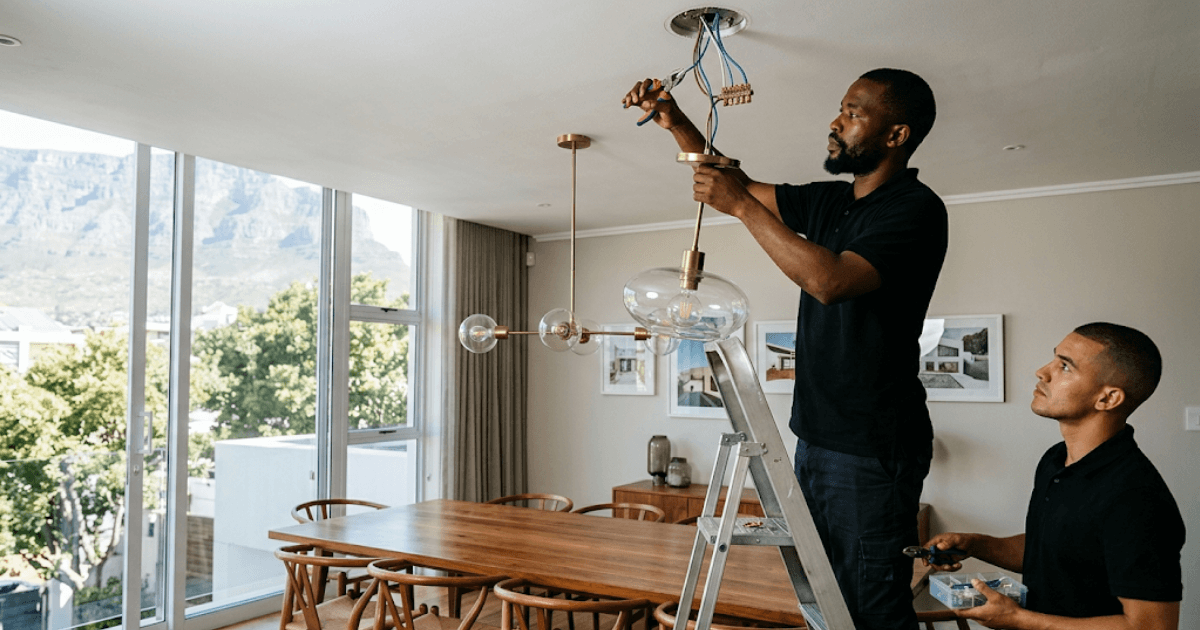
Handyman Homes provides a qualified electrician service across Cape Town, handling socket replacements, circuit fault finding, and full electrical inspections. Whether you are in Sea Point, Claremont, Parklands, or Steenburg, visit the Handyman Homes electrician page to book a same-day or scheduled visit.
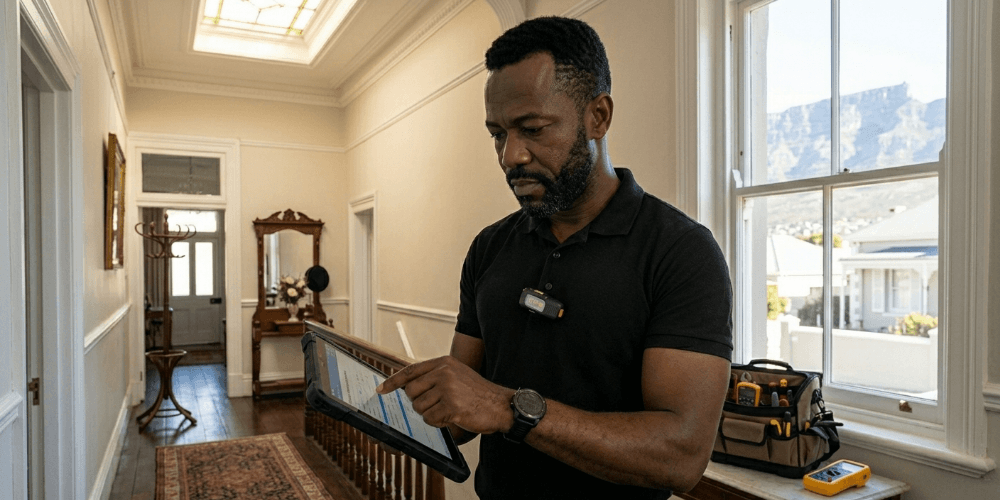
The South African wiring code recommends a full electrical inspection every 10 years for residential properties, and every time a property changes hands. Given Cape Town’s load-shedding environment, a shorter inspection interval of every 5-7 years is more prudent.
During an inspection, a qualified electrician will test every socket for correct earth continuity, check internal connections for signs of heat damage, verify that correct cable ratings are used for each circuit, and identify any sockets approaching end of life.
For older Cape Town homes – particularly those in Woodstock, De Waterkant, Tamboerskloof, and the Southern Suburbs built before 1990 – an inspection is strongly recommended if one has not been carried out in the past decade. If the inspection reveals wiring that needs updating across the whole home, the Handyman Homes renovation service can coordinate all electrical and other trades in a single managed project.
Look for discolouration or scorch marks around the plug holes, a burning smell, sparks when inserting plugs, loose or wobbly socket faceplates, plugs that do not stay inserted, or sockets that feel warm to the touch. Any of these signs warrants a call to a registered electrician.
Yes. Sockets older than 15-20 years have internal components that degrade over time, increasing the risk of arcing, overheating, and electrical fire. In Cape Town, load-shedding voltage spikes accelerate this degradation. Old sockets should be inspected and replaced where necessary.
No. Replacing electrical sockets must be carried out by a registered electrician under the Occupational Health and Safety Act Electrical Installation Regulations. DIY socket replacement is illegal, voids home insurance, and invalidates your Certificate of Compliance. Always use a qualified professional.
A Certificate of Compliance is a legal document issued by a registered electrician confirming that electrical work meets South African wiring code standards. It is required after any electrical installation or alteration, and is mandatory when selling a property.
A warm socket faceplate indicates overloading, a loose internal connection, or a failing socket. This is not normal and should be investigated by a qualified electrician immediately. Switch the circuit off at the distribution board until the fault is identified.
Individual socket replacements typically cost R350-R700 per socket depending on the socket type and accessibility. USB-integrated and surge-protected socket upgrades cost more. Contact Handyman Homes for a free quote and site assessment.
The South African wiring code recommends a full electrical inspection every 10 years for residential properties. Given Cape Town’s frequent load-shedding and associated voltage spikes, a 5-7 year inspection cycle is more appropriate. Inspections are also required every time a property changes hands.











2026 Copyright © Handyman Homes . All rights reserved. Created by Cooper Creative.