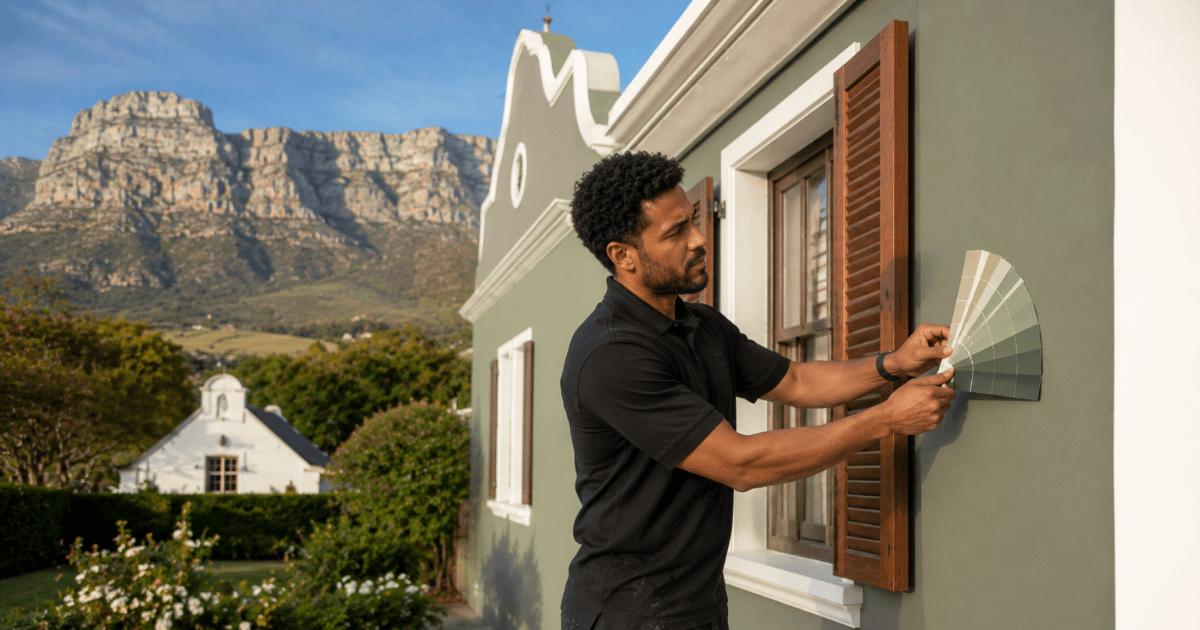



Choosing exterior paint colours for your Cape Town home is one of the most impactful decisions you will make as a homeowner. The right palette can transform a tired facade into a head-turning street presence, add perceived value before a sale, and protect your home from the Cape’s punishing UV and salty coastal air. Get it wrong and you are repainting within two years – at considerable cost.
Cape Town homes span an extraordinary range of architectural styles. From the whitewashed Cape Dutch gables of Constantia and Bishopscourt, to the Victorian terraces of Woodstock and Observatory, to the sleek modern apartments lining the Atlantic Seaboard from Sea Point to Bantry Bay – each style has its own colour logic. This guide breaks it all down so you can choose confidently. For the application side, the Handyman Homes painting contractors team handles colour consultation, surface prep, and full exterior repaints across all Cape Town suburbs.
Key Takeaways
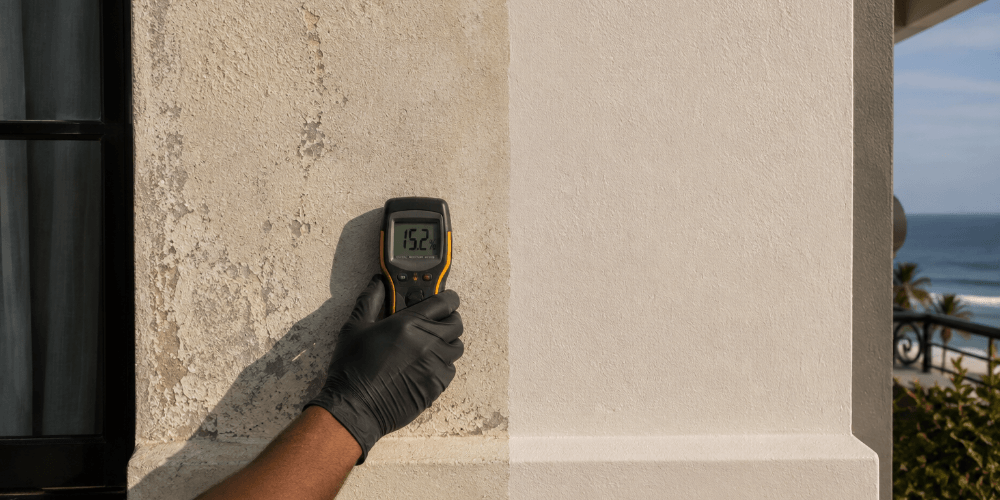
Before you fall in love with a colour chip, you need to understand what Cape Town’s climate does to exterior paint. The city sits at roughly 34 degrees south latitude, meaning UV radiation is significantly more intense than in Europe or the northern hemisphere. This causes pigments to break down faster – reds and blues fade most quickly, while earthy neutrals and whites hold their colour far longer.
The South Easter that batters the City Bowl and Atlantic Seaboard from November through March carries fine sand particles that act as an abrasive on any painted surface. Combined with the salt spray that coats homes from Sea Point to Llandudno, the result is a paint-destroying combination that inferior products cannot withstand. Cape Town’s winters add another challenge: sustained damp penetrates any surface where paint has cracked or peeled – which is why the preparation stage is every bit as important as the colour you choose.
For Cape Town homes, look for products with UV stabilisers, anti-fungal additives for mould resistance in winter-damp areas, and flexibility agents that allow the paint film to expand and contract with temperature changes. Prominent South African options include Plascon Nuroof Cool, Prominent Paints Weatherguard, and Dulux Weathershield – all available at Builders Warehouse and Leroy Merlin. The Handyman Homes exterior painting service specifies the correct product system for each suburb, wall aspect, and substrate type.
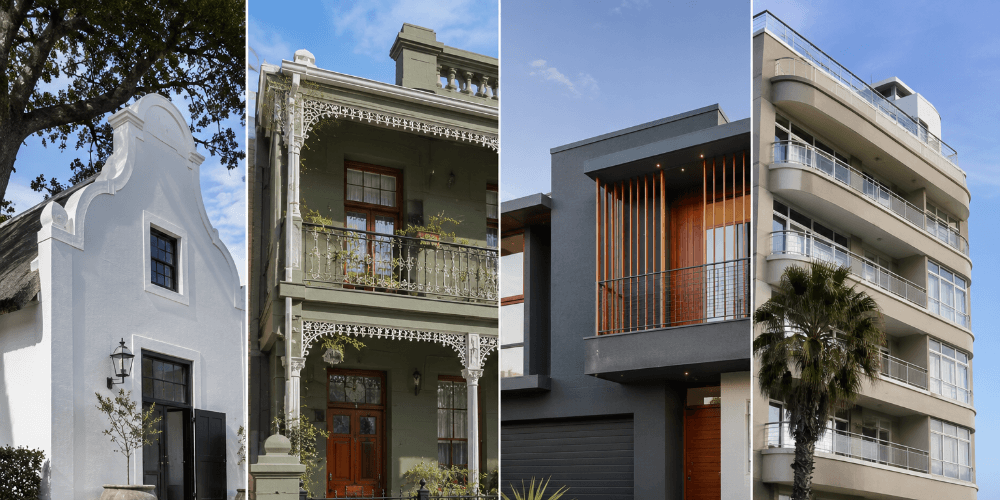
The most successful exterior colour schemes take their cue from the architecture itself. Trying to apply a Scandi minimalist palette to a Victorian terrace, or a warm ochre to a concrete modernist cube, rarely works. Here is a breakdown by the most common Cape Town home styles.
The classic Cape Dutch palette is non-negotiable in its foundations: white or off-white walls, with dark green, black, or deep charcoal for shutters, ironwork, and doors. If you want to introduce colour, do it on the front door only – a rich forest green, ox-blood red, or deep navy is appropriate. Homes in Constantia, Bishopscourt, and the Alphen estate area suit this restrained approach. If your heritage property is in a protected precinct, check with the City of Cape Town Heritage Resources department before committing to any colour change.
Victorian terraces in Woodstock, Observatory, and Zonnebloem reward a bolder hand. Soft sage green, dusty rose, warm terracotta, or deep teal on the body of the house, with contrasting white or cream trim and cornicing details, looks historically appropriate and contemporary at once. Avoid stark brilliant white on these homes – the warm brick tones read better against softer whites like Plascon Pale Ivory.
Contemporary Cape Town homes – particularly the flat-roofed designs popular in Tamboerskloof, Fresnaye, and the newer estates in Steenburg – suit a palette anchored in concrete grey, raw linen, and charcoal, with a single bold accent on a feature wall or the garage door. Deep charcoal is having a strong moment on modern Cape Town facades in 2026, particularly when paired with timber cladding and bronze hardware.
Coastal apartments from Mouille Point through Sea Point to Clifton are best served by light, reflective tones that combat heat gain and resist salt damage. Cool white, soft greige, and light stone are perennial performers here. Avoid dark colours on west-facing walls that take the full afternoon sun – they absorb heat, causing paint to blister and peel within a season.
Local colour trend forecasters and the major South African paint manufacturers have pointed in similar directions for 2026. The overarching theme is grounded warmth – a move away from the cool grey monotony of the previous decade toward richer, earthier tones that connect with the natural landscape.
Warm terracotta and clay tones are performing strongly, particularly for homes with gardens or natural stone elements. These shades feel at home in Cape Town’s fynbos-rich surroundings and complement the warm brick tones found in many Southern Suburbs homes. Sage and olive greens continue to grow in popularity, working particularly well on timber-clad homes and as feature walls on otherwise neutral facades.
On the neutral front, warm whites with yellow or pink undertones are replacing the cool blue-white that dominated through the 2010s. Plascon Timid White and Prominent Paints Linen are two locally available options that hit this mark well. If you want professional guidance on which palette suits your specific home and suburb, a Handyman Homes design consultation can map this out before any paint is ordered.
Paint a minimum A3-sized test patch on your actual wall and observe it at different times of day – morning, midday, and late afternoon. Cape Town’s light changes dramatically through the day and a colour that looks perfect at noon can look dull and flat by 4pm. Never make a final decision from a paint chip inside a shop under artificial lighting.
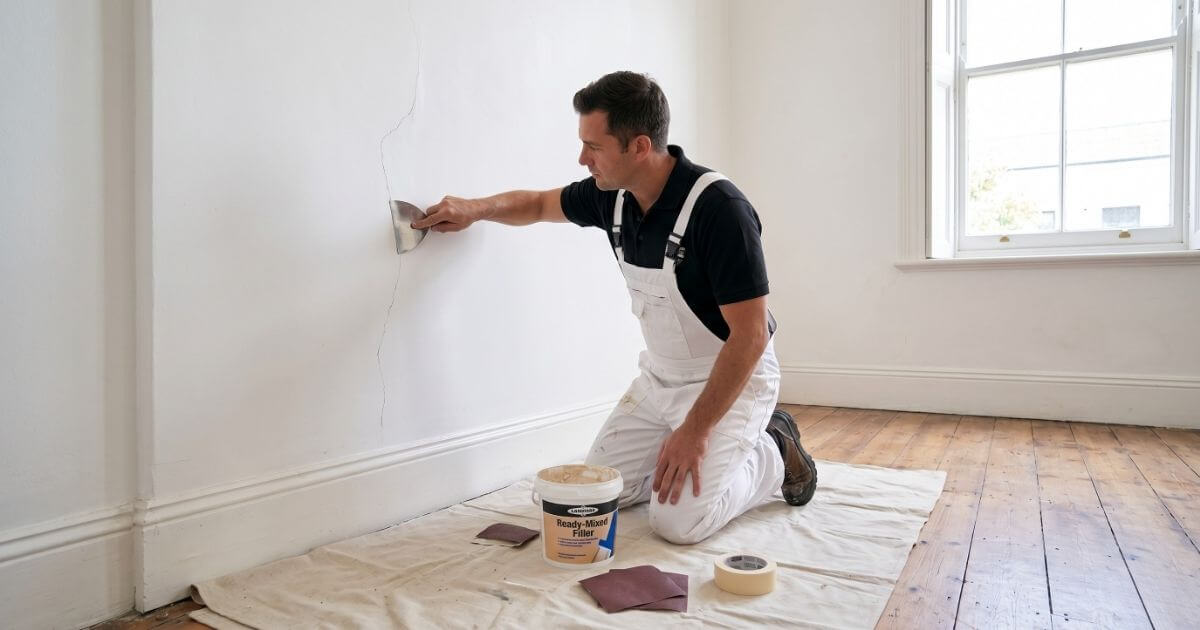
New paint applied over cracked, flaking, or dirty surfaces will fail within months. Proper preparation includes pressure washing, scraping, sanding back any loose material, filling cracks with an exterior-rated filler, and applying a penetrating primer before topcoats. Skipping any of these steps shortens the life of the paint significantly – the full prep process is covered in the Handyman Homes painting guide.
Plaster, face brick, fibre cement, and timber all require different paint systems. Using an interior-rated or substrate-inappropriate product is one of the most common mistakes homeowners make. A professional painting contractor will specify the correct system for your substrate and conditions.
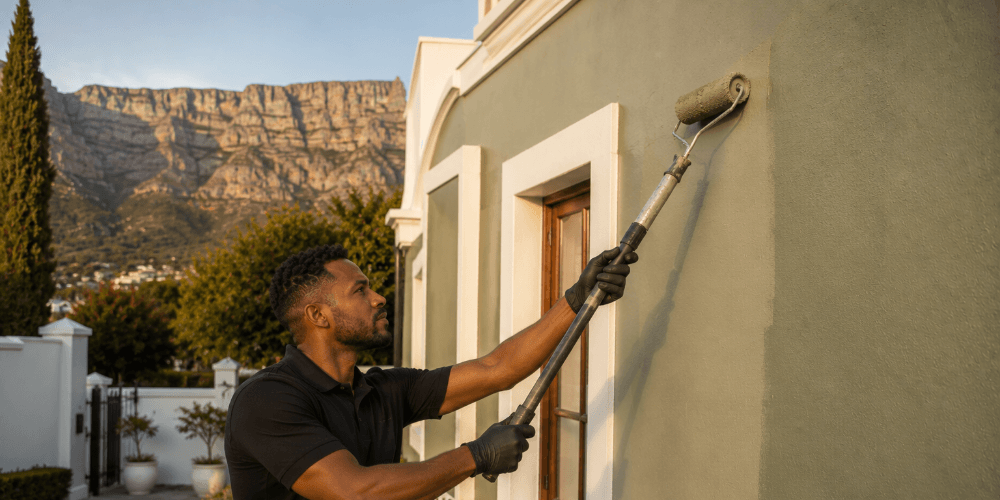
Many Cape Town homeowners attempt exterior repaints themselves, particularly for single-storey homes. For small jobs this is manageable – but for anything involving heights, large surface areas, or a heritage precinct property, the investment in a professional contractor pays for itself.
Handyman Homes painting contractors bring the correct preparation equipment, product knowledge, and application expertise to every job. They understand which products perform in Cape Town’s specific coastal and UV-heavy conditions, and they carry the right insurance for working at height. For full exterior repaints, colour consultations, or painting services for large Cape Town homes, visit the Handyman Homes painting contractors page. For interior painting coordinated alongside an exterior job, the interior painting service can be combined into a single managed project.
Warm terracotta, sage green, deep forest green, charcoal, and warm whites with yellow or pink undertones are all performing strongly in 2026. The trend is moving away from cool greys toward earthier tones that suit Cape Town’s natural landscape.
In Cape Town’s high-UV coastal environment, most exterior paints last between 5 and 8 years with proper preparation and application. Using premium UV-stabilised products and correct surface prep can push this toward 10 years or more.
Most residential areas have no colour restrictions, but heritage precincts including parts of De Waterkant have municipal guidelines on permitted colours. Always check with the City of Cape Town Heritage Resources department before painting a heritage property.
Look for exterior paints with UV stabilisers, anti-fungal additives, salt-resistance properties, and flexibility agents. Products like Plascon Weatherguard, Prominent Paints Weathershield, and Dulux WeatherShield are formulated for South African coastal conditions.
For single-storey homes with limited surface area, confident DIYers can achieve good results. For multi-storey homes, large surface areas, or heritage properties, a professional painting contractor is the better investment. Correct preparation alone makes the difference between paint that lasts 3 years and paint that lasts 10.
Always paint a large test patch of at least A3 size directly on your exterior wall and observe it at different times of day. Cape Town’s light changes significantly from morning to afternoon, and paint chips assessed under shop lighting are unreliable guides.
Dark colours on south-facing or shaded walls can work well. However, dark colours on west-facing or north-facing walls absorb significant heat, which can cause paint to blister and peel faster. Use dark accents on shaded walls or the front door rather than the full facade.










2026 Copyright © Handyman Homes . All rights reserved. Created by Cooper Creative.