


Finding a reliable painting contractor in Cape Town is more difficult than it should be. The market is crowded with operators ranging from highly skilled, professionally run teams to part-time painters who underquote to win jobs and then cut corners on preparation – the step that determines 80% of the final result.
This guide gives you everything you need to find, evaluate, and hire the right painting contractor in Cape Town. We cover what to look for, what to ask, how quotes should be structured, what the painting process should involve, and the red flags that tell you a contractor is not the right fit – before you have paid a deposit.
Whether you are planning an interior refresh in Fresnaye, an exterior repaint in Rondebosch, or a full paint job on a rental property in Woodstock, the principles here apply equally. A good painting contractor makes the process smooth and the result exceptional. Knowing how to identify one is the first step.
Key Takeaways

Interior and exterior painting in Cape Town are distinct specialisms. The best interior painters are not always the best exterior painters, and vice versa. Understanding the difference helps you evaluate whether a contractor has the right experience for your specific job.
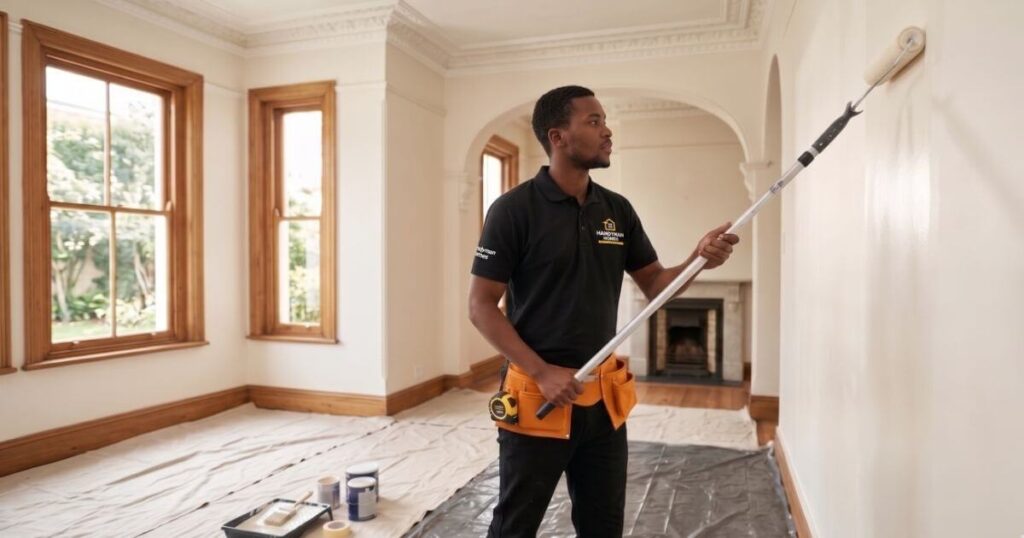
Interior painting in Cape Town homes is primarily about precision, finish quality, and minimal disruption. The skill lies in preparation – filling imperfections in plaster, sanding to a smooth finish, cutting in clean lines along cornices and skirtings, and achieving a consistent sheen level across large wall areas without lap marks or roller texture.
Interior painting is also an environment where the quality of the paint matters significantly. In Cape Town’s older homes – the Edwardian and Victorian properties common in Woodstock, Rondebosch, and the City Bowl – plaster quality varies enormously. A skilled interior painting contractor knows how to prime correctly for each surface condition, which prevents common problems like staining, peeling, and uneven sheen. If your walls have larger cracks or significant plaster damage before painting begins, a general handyman can handle surface repairs before the painters arrive.
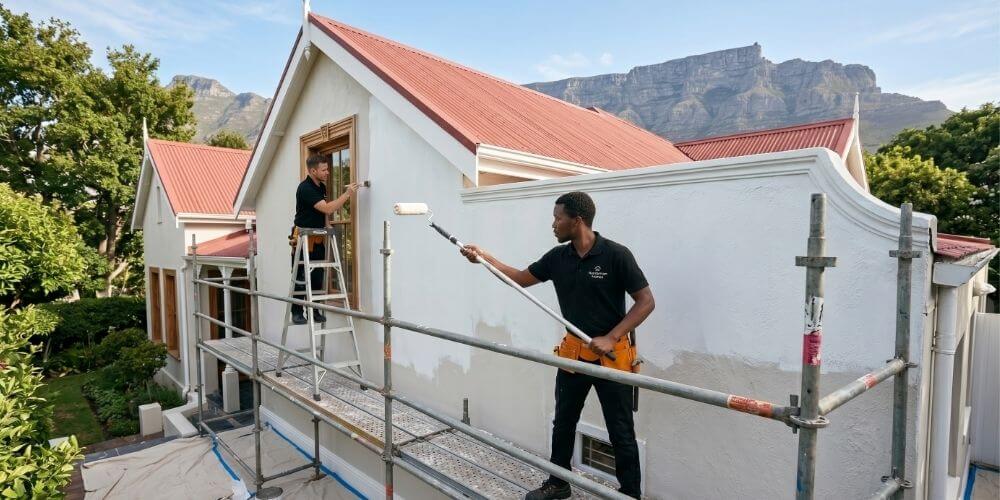
Exterior painting is physically more demanding and technically more complex. Cape Town’s climate is one of the most testing environments for exterior paint in South Africa: intense UV from October to March, salt-laden air from the Atlantic and False Bay, the abrasive South Easter, and sustained winter damp from the Cape’s Mediterranean rainfall pattern.
A competent exterior painting contractor in Cape Town will specify the correct paint system for your wall substrate and aspect, use an appropriate primer-sealer before topcoats, and ensure all cracks and surface defects are properly treated before painting begins. An exterior paint job done correctly in Cape Town should last 7-10 years. Done incorrectly, it may be peeling within 18 months.
The single most important indicator of a quality painting contractor is their commitment to preparation. The paint itself – the brand, the colour, the finish – matters far less than the preparation of the surface it is applied to. Here is what a professional painting process looks like from start to finish.
Before any brushes come out, a professional painting contractor inspects the surface condition in detail. They identify areas of damage, flaking, mould, water staining, or substrate failure that need to be addressed before painting. They specify the correct paint system for the surface – a different primer and topcoat is needed for bare new plaster, for previously painted surfaces in good condition, for exterior masonry in a coastal zone, and for timber. If the assessment reveals water ingress or damp penetration, this should be referred to a renovation specialist before any painting takes place.
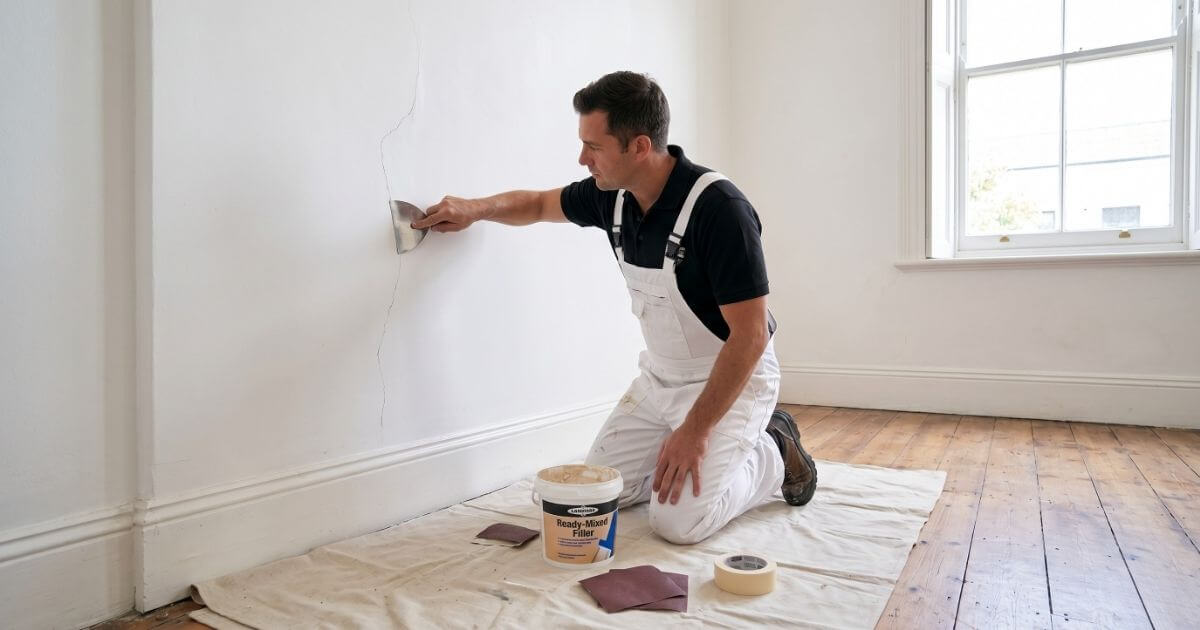
Preparation typically takes as long as – or longer than – the painting itself for a professional result. It includes cleaning the surface (pressure washing for exteriors, sugar soap wash for interiors), sanding back any flaking paint or rough texture, filling all holes, cracks, and surface defects with the appropriate filler, allowing the filler to dry fully, sanding smooth, and applying a primer coat to all repaired areas and any areas of bare substrate.
Once the surface is properly prepared and primed, the topcoat is applied in two coats with adequate drying time between them. Professional painters use quality roller covers matched to the surface texture – smooth covers for smooth plaster, medium pile for textured surfaces. Cutting in (the precise brush work at edges, cornices, and skirtings) is done first by hand before rolling the open areas.
A professional painter leaves the space cleaner than they found it. All masking tape is removed while the paint is still slightly tacky to avoid lifting edges. Drop cloths are removed and floors swept. Any paint splashes on adjacent surfaces are cleaned immediately. A walkthrough with the client before the team leaves allows any touch-up items to be addressed on the day.
Getting quotes from painting contractors in Cape Town is straightforward. Evaluating them correctly is harder. Here is how to read a painting quote properly.
A painting quote should separate labour and materials clearly. For each area of the project – living room walls, bedroom ceilings, exterior facades – you should be able to see the measured area, the paint system specified (primer plus two coats of a named product), the labour rate, and the total for that element. Materials should specify the brand and product name, not just “paint”. If you are also planning other work alongside your repaint – a bathroom renovation or kitchen update – ask whether painting can be included in a single managed quote to simplify the process.
When comparing quotes from multiple contractors, the number that matters is not just the total – it is what each quote includes. One contractor may quote R28,000 for a full interior job and another R22,000. But if the cheaper quote omits a primer coat, specifies an economy paint rather than a premium product, and excludes ceiling repainting, you are not comparing the same job. Read the scope of work of each quote carefully before making a decision.
A professionally prepared quote will list what is not included. Common exclusions in painting quotes include moving furniture (beyond covering and shifting it), repairs to water-damaged plaster beyond minor filling, specialist mould treatment, and repainting of surfaces outside the agreed scope. Understanding the exclusions helps you avoid unexpected extras.
Before signing a quote or paying a deposit to any painting contractor in Cape Town, ask these questions and evaluate the answers carefully.
A contractor who answers these questions clearly, without hesitation, and who welcomes the reference check is demonstrating confidence in their own work. Evasive or vague answers to straightforward questions are a warning sign.

Handyman Homes painting contractors serve the full Cape Town metropolitan area – from the Atlantic Seaboard suburbs of Sea Point, Bantry Bay, and Fresnaye, through the City Bowl and Southern Suburbs, to the Northern Suburbs including Parklands and Milnerton.
Every Handyman Homes painting job uses a preparation-first approach, specifies paint products appropriate for Cape Town’s coastal and UV conditions, and is backed by a workmanship guarantee. For interior and exterior painting services, visit the Handyman Homes painting contractors page. For interior painting specifically – including feature walls, colour consultation, and apartment repaints – the interior painting Cape Town page has full details on what is included.
If your painting project is part of a larger renovation – new flooring, a bathroom update, or a full home refresh – the Handyman Homes renovations service can coordinate all trades in a single managed project, so you deal with one team from start to finish.
Look for a contractor with verifiable references from similar projects in Cape Town, a clear written quote that breaks down labour and materials separately, and experience with the specific paint systems required for your wall type and environment. Check Google Reviews and ask for at least two recent references before signing anything.
Interior painting rates in Cape Town typically range from R25 to R55 per square metre of wall area for a standard two-coat system, depending on surface condition and the paint specification. Exterior painting is generally R30 to R70 per square metre due to the additional preparation required. Always get an itemised quote rather than a per-square-metre estimate.
A professional painting job should include surface preparation (filling holes, sanding, light cleaning), masking of adjacent surfaces, a primer coat where required, two topcoats of the agreed paint specification, and a clean-up on completion. Anything less than this is cutting corners that will show in the finished result.
A standard three-bedroom home interior takes 4-7 days for a professional team. An exterior repaint for a similar-sized home takes 5-10 days depending on the surface condition and the weather. Cape Town’s South Easter can affect exterior work during summer – a good contractor will factor this into the schedule.
You should clear the room as much as possible and remove smaller items and valuables. Most painting contractors will move large furniture to the centre of the room and cover it with dust sheets, but clearing the room significantly speeds up the job and reduces the risk of accidental damage to your belongings.
The dominant brands used by professional painting contractors in Cape Town are Plascon, Prominent Paints, and Dulux. All three manufacture products across a range of price and performance tiers. For exterior work in Cape Town’s UV and coastal conditions, a premium exterior formulation from any of these brands significantly outlasts economy products.
Yes, most painting contractors in Cape Town will apply client-supplied paint, though this may affect the warranty they offer on the finished work. If you supply the paint, ensure you have calculated the correct quantity for the coverage area – most contractors will not be responsible for running out mid-job if the quantity is insufficient.







2026 Copyright © Handyman Homes . All rights reserved. Created by Cooper Creative.