



One of the most common questions Cape Town homeowners ask before starting a renovation is: how long will this actually take? And one of the most common renovation frustrations is the answer turning out to be considerably longer than expected.
Renovation timelines in Cape Town are affected by a unique combination of factors: the city’s distinct seasons and weather patterns, the lead times of local and imported materials, the capacity of skilled trades, the time required for municipal approvals on structural or heritage projects, and the inevitable surprises that emerge when walls and floors are opened up in properties that span over a century of construction styles.
This guide gives you honest, realistic timelines for the most common renovation types in Cape Town – from a single bathroom refresh to a full home overhaul. It also covers the specific factors that cause delays, and the steps you can take before construction begins to keep your project on schedule and on budget.
Key Takeaways

A renovation timeline in Cape Town is shaped by a set of conditions that do not apply in the same way in Johannesburg, Durban, or other South African cities – or in the international renovation content that dominates YouTube and home improvement websites.
Cape Town has one of the most distinctly seasonal climates in South Africa. The Mediterranean weather pattern delivers dry, hot summers from November through March – ideal for interior work but challenging for exterior painting, because the South Easter wind (which gusts consistently at 40-60km/h and occasionally well beyond that) makes spray painting impossible and causes brush and roller finishes to dry too quickly, leaving marks. This is worth factoring in when scheduling any exterior painting work – the shoulder seasons of March to May and September to October are far more reliable.
From May through August, Cape Town’s winter brings sustained rain and cold. Interior work continues unaffected, but any exterior element of a renovation – painting, waterproofing, paving, pool work, outdoor tiling – is subject to weather delays. A project that involves significant exterior work should ideally be planned to coincide with those shoulder seasons.
Cape Town is a long way from most manufacturing centres. Custom cabinetry from local Cape Town manufacturers takes 4 to 6 weeks to produce after an order is confirmed. Imported tiles from Spain or Italy can take 8 to 14 weeks if they are not in stock locally. Certain light fittings, bathroom fixtures, and hardware items from international suppliers can take 6 to 10 weeks if ordered online.
The most common cause of a Cape Town renovation running over schedule is materials not being on site when the relevant trade is ready to install them. The work stops, the team moves to another job, and getting them back on your specific timeline becomes difficult. The solution is to order all materials and confirm delivery dates before the construction start date – ideally with a week’s buffer between delivery and the relevant installation phase.
Cape Town has a strong trades market, but the best contractors – tilers, kitchen fitters, waterproofers, electricians, and plumbers – are consistently in demand. A reputable contractor in Cape Town may have a 3 to 6 week booking lead time. Planning your project well in advance of when you want work to start is essential, particularly for renovations planned around school holidays or the pre-summer period.
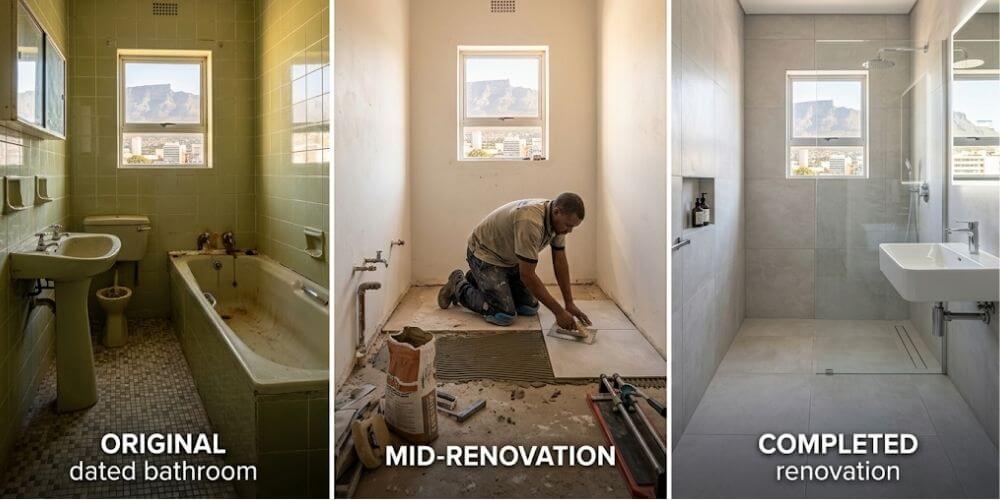
Here are honest, experience-based timelines for the most common renovation projects in Cape Town homes. These cover the full process from first contact to completed handover – not just the construction phase.
A standard Cape Town bathroom renovation – new suite, new tiling, new vanity, updated fixtures – breaks down roughly as follows:
The biggest variable is tile availability. If you choose tiles that are in stock at a Cape Town supplier, the procurement phase is fast. If you choose a tile that needs to be ordered from Johannesburg or imported, add 2 to 4 weeks.
A full kitchen renovation has a longer timeline than a bathroom primarily because of cabinetry manufacture. The process breaks down as follows:
Keeping the kitchen timeline on track depends almost entirely on making all design decisions and approving the cabinetry drawings promptly at the beginning of the project. Every week of delay in that phase pushes the entire project out by a week.
A cosmetic refresh of a single room – new paint, sanded and sealed floors, updated light fittings – is the fastest category of renovation. A professional painting team can complete a standard bedroom or living room in 2 to 3 days. Allow an additional day for floor sanding and sealing, and one day for electrical work if new fittings are being installed. Total: 5 to 10 working days including any minor surface repairs.
A full renovation of a Cape Town home – typically involving kitchen, bathrooms, all interior painting, flooring, and possibly some structural or layout changes – is a 3 to 6 month project. The wide range reflects the enormous variation in scope, the number of decisions required, and whether structural or council approval elements are involved.
For older Cape Town homes in suburbs like Woodstock, Observatory, Tamboerskloof, and Rondebosch, full renovations often reveal condition issues that add time and cost to the project: crumbling plaster that needs full replacement, old wiring that requires a full rewire to achieve compliance, or plumbing systems that are beyond repair and need a full replacement. Building in a 15 to 20% time and budget contingency is prudent for whole-house renovation projects.
The planning phase of a renovation – from the first conversation with a contractor to the day work starts on site – is consistently where the most time is lost in Cape Town renovation projects. And it is almost always time that did not need to be lost.
The single most effective thing a Cape Town homeowner can do to keep a renovation on schedule is to make all material and design decisions before construction begins. Every decision that gets made mid-project – changing the tile specification after the order has been placed, switching from one vanity to another after the plumber has already set the waste point position, adding an extra power point that requires the electrician to revisit – costs time and often money.
This is not about being inflexible – it is about understanding that once a renovation is in motion, changes have a ripple effect that is rarely limited to just the changed element. A tile change affects the grout selection, the adhesive specification, and the tiler’s schedule. A layout change in the kitchen affects the plumber, the electrician, and the cabinet maker. Decisions made before work starts have no ripple effect at all.
Cape Town homeowners who own properties in heritage precincts or who are planning structural changes need to factor municipal approval time into their project timeline. The City of Cape Town’s building plan submission and approval process typically takes 6 to 12 weeks for straightforward residential applications, and longer for heritage properties in areas like De Waterkant, Bo-Kaap, Woodstock, and parts of the City Bowl.
Work that does not require council approval – like-for-like fixture replacements, interior cosmetic work, and non-structural changes – can proceed without this phase. But any work that involves changing room layouts, removing or adding walls, adding structures, or altering the roofline requires a building plan submission. Starting structural work without the required approvals is a significant risk that can result in a stop-work order and costly demolition.
Based on experience managing renovation projects across Cape Town – from compact Sea Point apartments to large Constantia family homes – these are the practices that keep projects on schedule.
The rule is simple: no trade should arrive on site without all the materials they need to complete their phase already being there. This means ordering tiles, cabinetry, fixtures, and finishes before construction begins, confirming delivery dates, and building a week’s buffer into the schedule between delivery and installation. A contractor who starts demo before materials are confirmed for delivery is gambling with your timeline.
In projects involving multiple family members or stakeholders, disagreement about decisions mid-project is a very common cause of delay. Before the project starts, agree on who has final decision-making authority. That person should be available to respond to contractor questions within 24 hours during the construction phase.
Every Cape Town renovation timeline should include a contingency buffer at the end – typically 10 to 15% of the total project duration. This is not pessimism; it is practical experience. Older Cape Town homes in particular regularly reveal conditions that could not be anticipated from the outside: burst or corroded pipes behind walls, electrical wiring that does not meet compliance, structural elements in worse condition than expected. Having time and budget contingency means these discoveries are a manageable inconvenience rather than a project crisis.
One of the most significant sources of delay in self-managed renovations is the gaps between trades – the days lost waiting for the plumber to finish before the tiler can start, or the electrician to sign off before the painter can access the ceiling. A managed renovation service that coordinates all trades on your behalf eliminates most of these gaps, because the project manager ensures each phase is ready to hand over to the next trade on schedule.
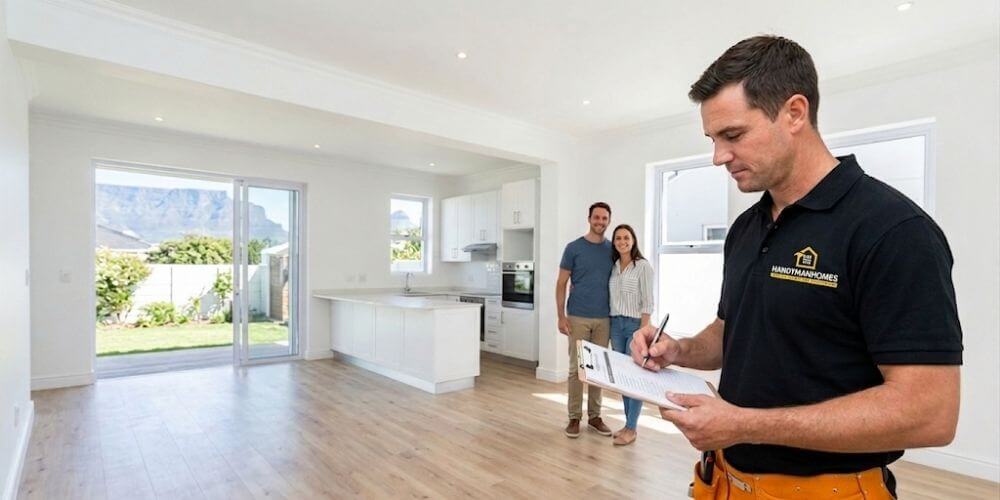
Handyman Homes manages renovation projects across Cape Town – from single bathrooms and kitchens through to full home renovations. The project management approach covers scoping, quoting, materials procurement, trade coordination, and quality control through to final handover.
To discuss your renovation timeline and get a detailed project plan, visit the Handyman Homes renovations page. For bathroom and kitchen renovation planning specifically, the bathroom renovations page and kitchen renovations page have full detail on what each project involves and what to expect at each stage.
Whether you are planning a renovation in Bantry Bay, Bergvliet, Oranjezicht, or Parklands, Handyman Homes will give you a realistic timeline, a transparent quote, and a managed process that keeps your project on track from start to finish.
A full home renovation in Cape Town typically takes 3 to 6 months from planning to practical completion, depending on the scope of work, the size of the property, and how quickly decisions are made. Larger or more complex projects involving structural changes, heritage approvals, or extensive custom work can take 9 to 12 months.
A standard bathroom renovation in Cape Town takes 2 to 3 weeks for the physical construction phase, assuming all materials are on site before work begins. The full process including planning, quoting, ordering materials, and completing snagging typically takes 6 to 10 weeks from first contact to finished bathroom.
A kitchen renovation in Cape Town takes 4 to 8 weeks for the construction phase. The biggest variable is cabinetry lead time – custom or semi-custom cabinetry from Cape Town manufacturers typically takes 4 to 6 weeks to manufacture and deliver after the order is confirmed. Allow 10 to 14 weeks for the full process.
The most common causes of delay are late material deliveries, changes to the scope of work mid-project, unexpected conditions discovered when walls or floors are opened up (burst pipes, substandard existing work, structural issues), and poor weather during exterior work. Planning thoroughly before work begins and ordering all materials ahead of the construction start date eliminates most of these delays.
For a single-room renovation like a bathroom or kitchen, most homeowners stay in the property. For whole-house renovations or projects involving significant structural work, dust, noise, and access disruption usually make temporary relocation the more practical choice. Discuss this with your contractor before work begins.
The single most effective way to speed up a renovation is to make all material and design decisions before construction begins, and to have all materials on site or confirmed for delivery before the team starts. Changes to the scope of work mid-project are the biggest cause of delays and cost overruns. A clear, agreed brief and a decisive client keeps a project on schedule.
Yes, particularly for exterior work. Cape Town’s South Easter makes outdoor painting and waterproofing difficult from November through March, and the winter months (May to August) bring sustained wet weather that can interrupt exterior projects. A good Cape Town contractor will factor seasonal weather into the project schedule and plan exterior phases accordingly.










2026 Copyright © Handyman Homes . All rights reserved. Created by Cooper Creative.